
Animal Chiropractic in Tulsa
What is animal chiropractic?
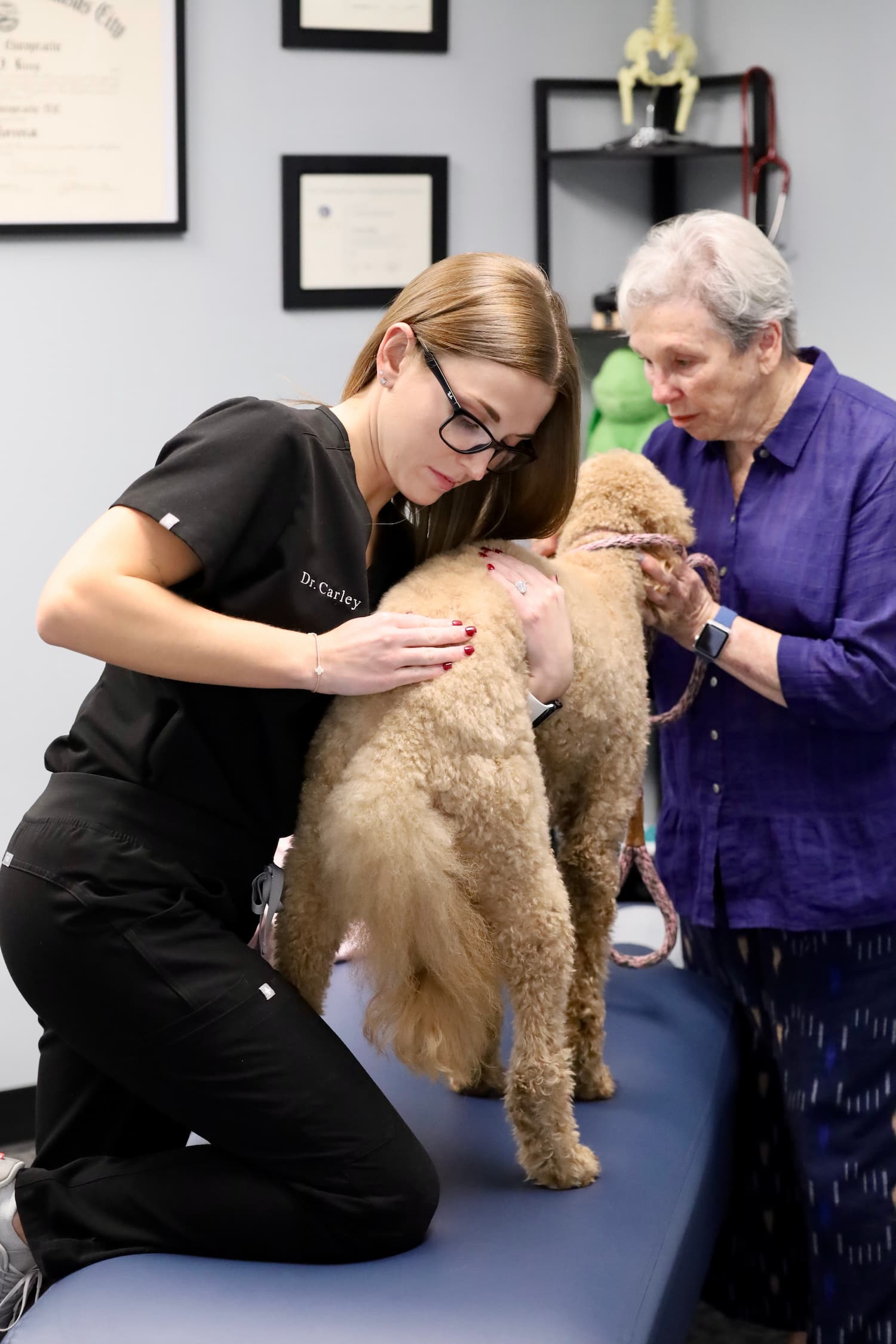
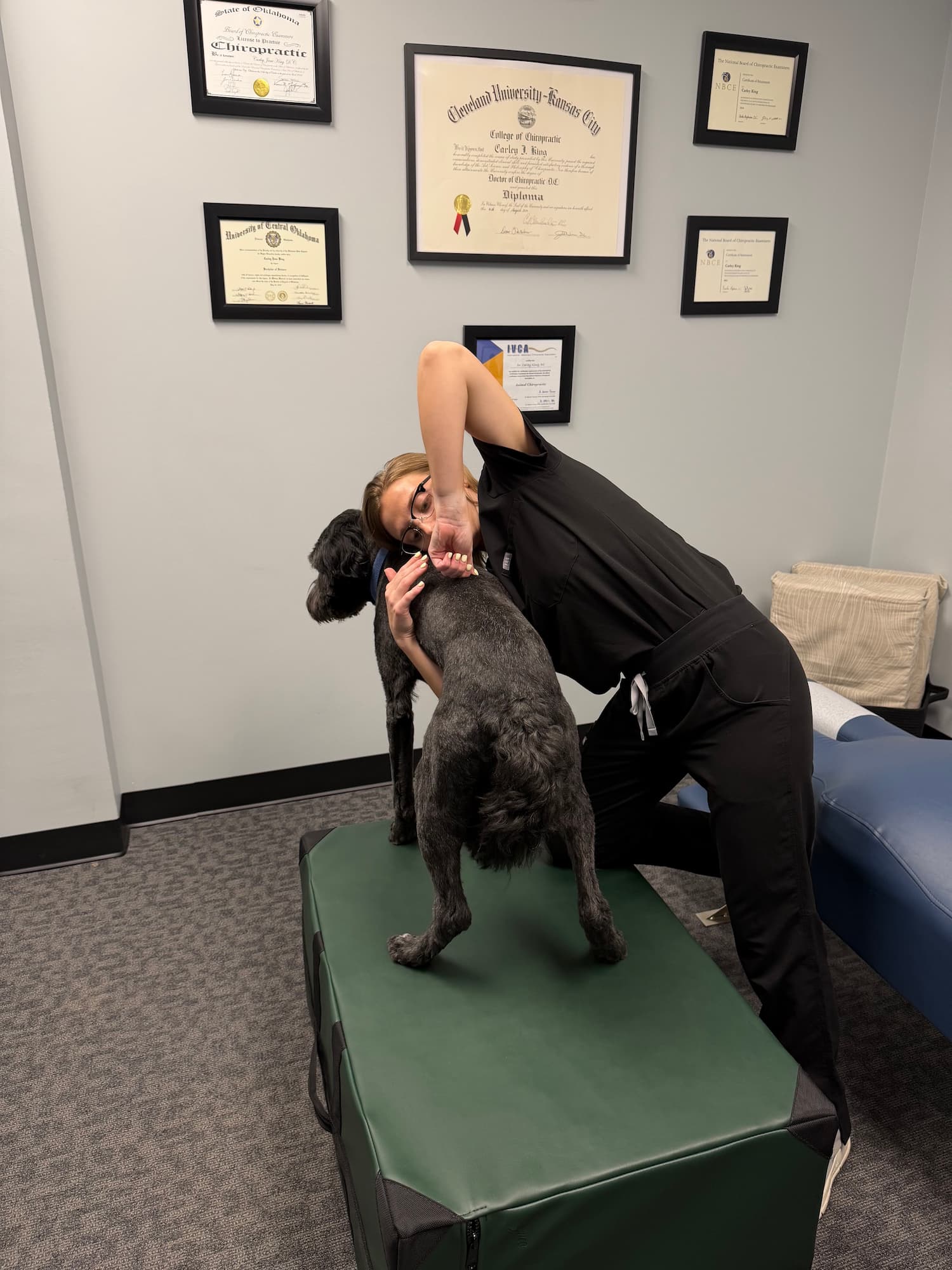
Animals have a spine and nervous system, just like we do. When a joint loses its normal motion, it can irritate nearby nerves and change how your animal moves, stands, or behaves. Animal chiropractic restores that motion with a precise, gentle adjustment, so the nervous system works the way it should.
How your animal benefits
Who we help
Weekend companions, working animals, or competitors. Young or old, active or recovering, most animals do well with care.
Signs to watch for
Simple, upfront pricing
How pricing works
We keep animal chiropractic pricing simple and predictable, based on your animal's size and whether it's a first visit or a follow-up. There are no hidden fees or long-term contracts — you pay per visit and can stop anytime. Most animals do best with an initial exam and adjustment, followed by periodic follow-up care to maintain results. Not sure where to start? Book a free consultation and we'll walk you through what your animal needs and what it will cost.
Animal chiropractic FAQs
First Appointment
We respect your time, so prior to your first appointment we will have you fill out your New Practice Member paperwork for your animal(s) and submit it online so that we can make the most of your time at your visit. Dr. Carley will review the paperwork and health goals that you have for your animal(s) with you before beginning her comprehensive exam. This exam includes reviewing any previous x-rays if applicable, gait and posture analysis, a musculoskeletal exam, as well as static and motion palpation of the spine and extremities. After this consultation and examination, Dr. Carley will perform gentle and specific manual adjustments to your animal's spine and extremities to correct any subluxations present. She will work with you to establish a care plan unique to your animal's needs and goals.
Visit Frequency
The frequency of adjustments will vary from case to case. There are conditions that require once every other week adjustments and others that only require adjustments once every 4-8 weeks. Chiropractic adjustments are retraining the nervous system to support the spine and body in maintaining a new optimal state of health. All of the supporting ligaments, muscles, and tendons are changing and adapting as well. This process takes time and repetition!
New Practice Member Form
Your New Practice Member paperwork will be provided for you to complete prior to your first appointment so we can make the most of your visit. Please contact us to receive your form, and reach out with any questions.
Should the adjustment make a "popping" sound?
No. Most animal chiropractic adjustments will not make a cavitation (popping) sound. Animal chiropractic adjustments should look uneventful and gentle. The absence of a cavitation during your animal's adjustment is NORMAL. We do not force joints to make noise and their spinal anatomy is not built to cavitate. The more noise you hear is not indicative of a better adjustment; in fact, if a forceful adjustment is delivered it could be potentially damaging to your animal's joints.
What are some factors that can cause these subluxations?
- Excess weight
- Arthritis
- Genetic/anatomic predisposition
- Previous physical trauma
- Emotional distress
- Poor nutrition
- Medication(s)/Antibiotics
- Overuse injuries
- And more…
What training does Dr. Carley have that makes her qualified to adjust animals?
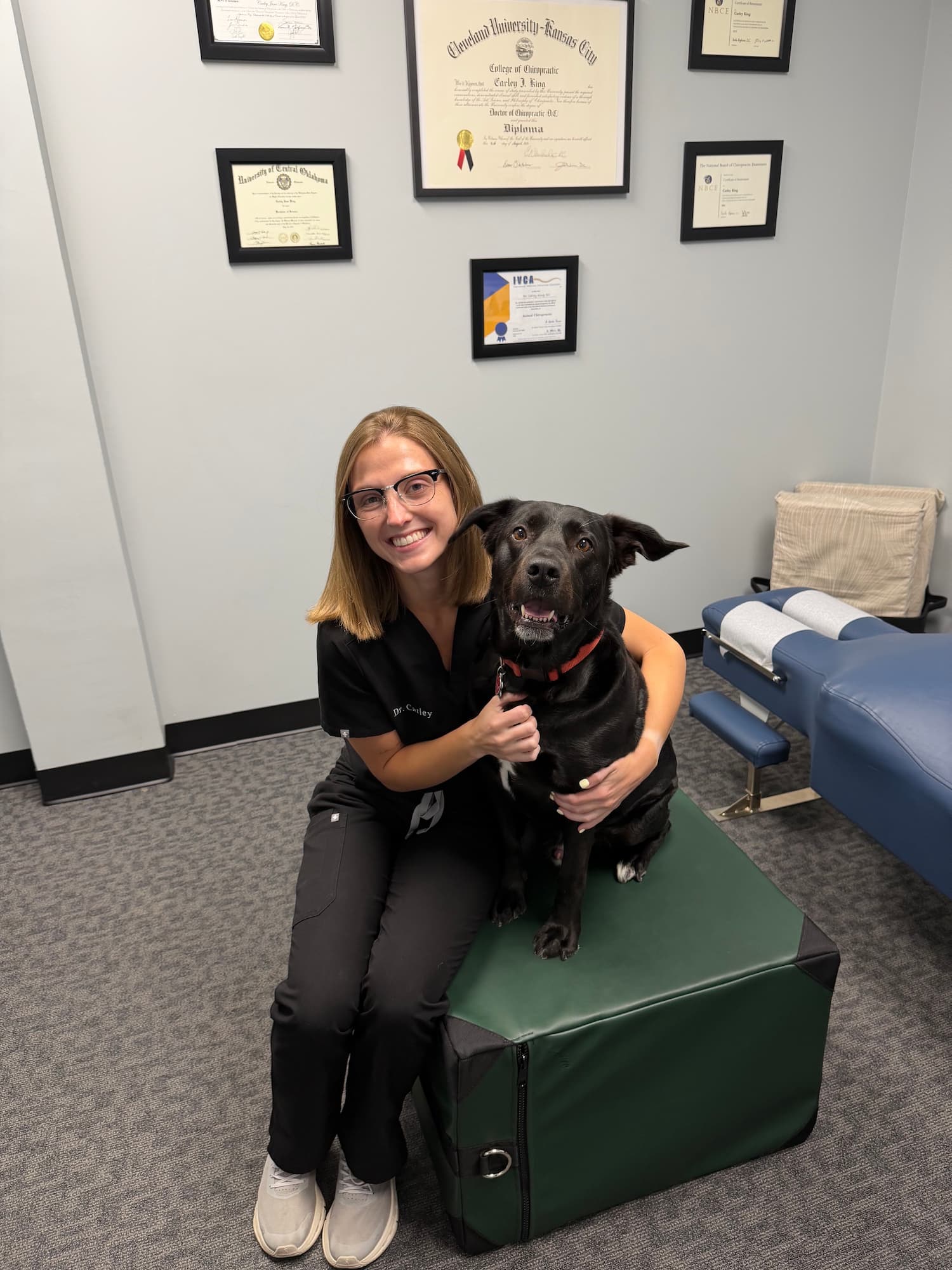
Dr. Carley received her certification from Options for Animals College of Animal Chiropractic for completing 210 hours of dedicated animal chiropractic education where she learned from both licensed veterinarians and chiropractors. Dr. Carley is additionally certified by the International Veterinary Chiropractic Association (IVCA).